

Drug testing is a prevention method often part of a comprehensive drug-free workplace program. It’s crucial for employers to be aware of the potential for drug abuse in the workplace and to have policies and procedures in place to address it. This can include implementing drug testing programs, providing education and support for employees struggling with addiction and creating a workplace culture that promotes safety, health and wellness.
Any workplace drug testing program should comply with local, state and federal laws. The following steps can help ensure a safe, productive, drug-free work environment.
Why Employee Drug Testing Programs Matter
There has been an increase in U.S. workers testing positive for drugs like cocaine. The increase can signify casual use among the working populace, suggesting a need for proper and professionally driven employee drug testing and screening programs. Keep in mind that drug screenings and lab-based tests are separate entities. While both types generally detect for the same drugs, laboratory testing is far more thorough. Don’t consider an instant screening a final outcome without confirmation from a complete laboratory testing procedure.
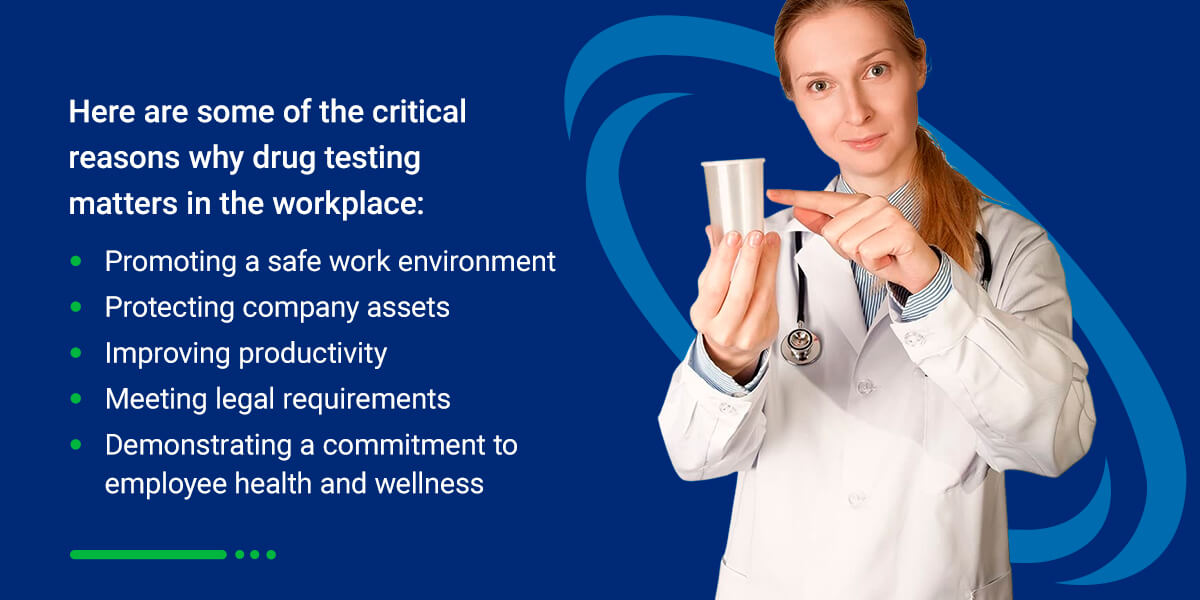
Workplace drug testing can have several significant benefits for employers and employees. Here are some of the critical reasons why drug testing matters in the workplace:
- Promoting a safe work environment: Employees who use drugs or alcohol may be more prone to accidents, injuries and mistakes on the job, which can put themselves and others at risk. Employee drug screening and testing can help identify these workers and ensure they are not working under the influence, which can help create a safer work environment for everyone.
- Protecting company assets: Drug use can also lead to increased employee theft and other forms of misconduct in the workplace. By identifying employees using drugs, employers can take steps to prevent these behaviors and protect their company assets and reputation.
- Improving productivity: Employees using drugs may experience decreased productivity and increased absenteeism, which can impact the company’s overall performance. By identifying and addressing drug use, employers can help improve their workforce’s productivity and efficiency.
- Meeting legal requirements: Depending on the industry and location, drug testing may be required by law. Employers can ensure they comply with these regulations by implementing a drug testing program.
- Demonstrating a commitment to employee health and wellness: Drug testing can also be a way for employers to show their employees that they are committed to creating a healthy and safe workplace. By promoting a drug-free work environment, employers can help support employees’ overall health and well-being.
Drug testing employees can help promote safety, productivity and legal compliance while demonstrating a commitment to employee health and wellness.
Common Drugs Abused in the Workplace
Maintaining a safe and healthy environment begins with identifying the most commonly abused substances in the workplace so you can develop policies to help employees recover. Below are the most widely used substances by employees:
- Alcohol: Although it is legal for adults to consume alcohol, excessive drinking can impair an individual’s ability to perform their job duties safely and effectively. Approximately 79,000 deaths yearly due to excessive alcohol use in the U.S.
- Marijuana: With the legalization of marijuana in some states, it has become more prevalent in the workplace. However, its use can impair cognitive function, coordination and judgment, impacting job performance.
- Prescription drugs: Prescription drugs, such as opioids, benzodiazepines and stimulants, are frequently misused in the workplace. These drugs can cause drowsiness, confusion and impaired judgment, affecting job performance and safety.
- Cocaine: Cocaine is a powerful stimulant that can cause users to feel energized and confident, which may prompt some employees to use it without recognizing the consequences. Cocaine use can lead to anxiety, agitation and impaired judgment.
- Methamphetamine: Methamphetamine is a highly addictive stimulant that can cause users to become hyperactive and experience feelings of euphoria. It can also cause paranoia, aggression and impaired judgment.
- Synthetic drugs: Synthetic drugs, such as synthetic marijuana and bath salts, are frequently abused in the workplace. These drugs can cause unpredictable and dangerous effects, including hallucinations, seizures and aggression.
It’s important to note that substance abuse in the workplace can occur with any drug — illicit or illegal. Employers should be aware of the signs of drug abuse and take appropriate action to ensure a safe and healthy work environment.
Implementing a Drug Test Program
Implementing a plan for drug testing employees can be challenging, but it is essential to ensure a safe and productive workplace. Here are some steps to follow:
- Develop a drug testing policy: Create a policy that outlines the employee and employer drug testing procedures, including the types of drugs that will be tested, the frequency of testing and the consequences of a positive test result.
- Get legal advice: Drug testing policies are subject to state and federal laws, so it’s crucial to consult with legal counsel to ensure that your policy complies with all applicable laws and regulations.
- Communicate the policy: Make sure all employees are aware of the drug testing policy and understand the consequences of violating it. Provide all employees with a copy of the procedure and have them sign an acknowledgment form.
- Select a drug testing method: There are different types of drug tests, including urine, blood, saliva and hair tests. Choose the method that best suits your company’s needs and budget. Consider pairing instant screening methods with thorough lab-based drug testing for more accurate results.
- Choose a testing provider: Consider partnering with a reputable drug testing provider who can help you with testing logistics, such as collecting samples, maintaining specimen integrity and delivering compliant test results.
- Train supervisors: Supervisors should be trained in recognizing signs of drug use and handling drug-related incidents.
- Conduct the testing: Implement the drug testing policy by conducting tests on employees per the policy.
- Respond to positive test results: Develop a plan to address positive results, including disciplinary actions and resources for employees needing help with drug addiction.
- Monitor and evaluate the program: Regularly review and assess the drug testing program to ensure it is effective and meets your company’s goals.
Choose Convenience and Quality for Your Company

Many companies maintain a drug-free workplace to reduce accidents, lower employee liability, and promote health and safety policies. Implementing a drug testing program at your workplace is instrumental in this regard. At Test Smartly Labs, we are dedicated to providing compliant, timely and accurate test results to advance the health and well-being of your employees. We offer mobile or onsite drug testing where we can travel to your business. You can also choose our prepay option, where you’ll save money and your employees can show up to any of our multiple locations for testing independently.
Contact us today to set up a testing program for your workplace.